EMCR Symposium

On behalf of the ISFTD EMCR committee, we would like to welcome you to our annual online symposium showcasing the latest work of students and early-mid career researchers in the field. This online event offers EMCRs the opportunity to promote their latest research developments and techniques and engage with EMCRs in the FTD and related disorders ahead of the annual ISFTD in-person conference. We have an exciting line-up of internationally renowned guest speakers, short talks, and datablitz’ from EMCRs, as well as prizes for best-rated talks.

The symposium will take place April 14 – 16, 2026.

Tuesday, April 14: 9am – 12pm (UTC +3) Click here for time zone conversion.
Wednesday, April 15: 9am – 12pm (UTC +5) Click here for time zone conversion.
Thursday, April 16: 9am – 12:30pm (UTC -4) Click here for time zone conversion.

Download the program book.

The aim of this symposium is to highlight students and EMCRs working in FTD, and to offer a platform for emerging researchers to present their work ahead of the annual in person conference.
We invite all FTD researchers to attend, and are inviting abstracts from EMCRs (<15 years post PhD).

Abstracts will be considered on a rolling basis.

Registration will remain open until April 13, 2026.

Keynote Speakers

Tuesday, April 14, 2026

What Population-Based Real-World Data Reveal About Frontotemporal Dementia

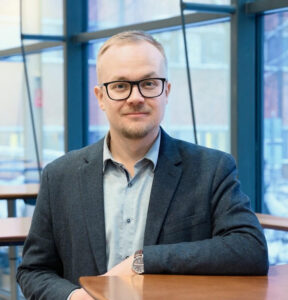
Dr. Eino Solje

Population-based real-world data are reshaping how we understand FTD. This talk highlights novel evidence showing that sociodemographic factors and even premorbid behaviors, such as criminality, may precede clinical onset—opening new possibilities for earlier recognition of FTD.

Dr. Eino Solje

Dr. Eino Solje is an Associate Professor (tenure track) of Clinical Research at the University of Eastern Finland, Director of the Brain Research Unit, and Chief Neurologist of the Memory Center at Kuopio University Hospital. His research focuses on frontotemporal dementia (FTD), with particular expertise in C9orf72-associated disease. He also leads the national DEGE-RWD early-onset dementia real-world project. He heads the Frontotemporal Lobar Degeneration and Early Onset Dementia research group and is actively involved in several international consortia, including GENFI and NIC-FTD.

Lighting the Path(ology): Inflammation Brain-body Cross-talk in Frontotemporal Dementia – A Multimodal Perspective

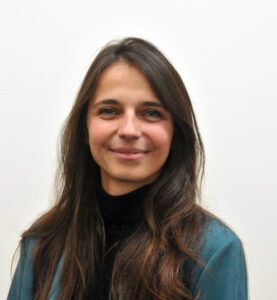
Dr. Maura Malpetti

This talk will highlight how multi-tracer PET, blood-based biomarkers and post-mortem pathology together “light up” inflammatory signatures across brain and body in people with frontotemporal dementia and related conditions. I will show how these multimodal markers track symptom progression, interact with proteinopathies and neurodegeneration, and help to disentangle heterogeneous disease trajectories. Finally, I will discuss how defining individual inflammatory “fingerprints” could enable smarter trial design and personalised immunomodulatory strategies for people living with frontotemporal dementia.

Dr. Maura Malpetti

Dr. Maura Malpetti is an Assistant Research Professor and Race Against Dementia Alzheimer’s Research UK Fellow at the University of Cambridge and an Emerging Leader at the UK Dementia Research Institute. She trained at Vita-Salute San Raffaele University and University of Cambridge, and as visiting researcher at UCSF and LMU Munich. Her research focuses on PET imaging and fluid biomarkers to study frontotemporal dementia, aiming to identify markers and therapeutic targets for early diagnosis and treatment. She leads the Open Network for Frontotemporal Dementia Inflammation Research (ON-FIRE) study, connecting 20+ UK centres to accelerate clinical research in FTD.

Wednesday, April 15, 2026

Frontotemporal Dementia: Priorities for clinical research in the Global South

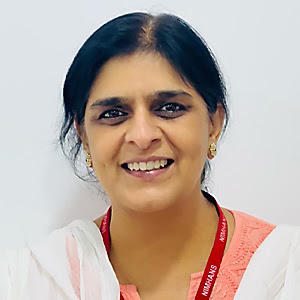
Dr. Suvarna Alladi

Emerging research on Frontotemporal dementia has advanced our understanding of disease neurobiology and clinical manifestations across diverse contexts. This talk will focus on advances in diagnosing FTD across cultural, linguistic, educational, and ethnic contexts. Differences in clinical manifestations, complexity of genetic diagnosis and opportunities for research to fill these critical gaps will be discussed.

Dr. Suvarna Alladi

Dr. Suvarna Alladi is a Professor of Neurology at the National Institute of Mental Health and Neurosciences in Bangalore, India, where she coordinates a multidisciplinary service for persons living with dementia.

Modernising FTD Assessment: Improving Brief Cognitive Measures for Better Detection, Subtyping, and Disease Monitoring

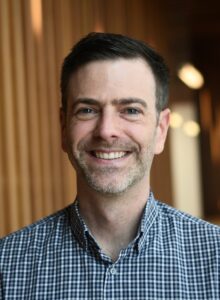
Dr. David Foxe

In this talk, David will make the case that brief cognitive screening remains important for dementia assessment and clinical management. He will outline how advances in statistical and machine‑learning methods open up opportunities to develop smarter, interactive tools for analysing patient cognitive data. David will present his Addenbrooke’s Cognitive Examination‑III (ACE‑III)–based tools, which i) improve detection of non‑Alzheimer dementia presentations compared with healthy ageing, and ii) differentiate the primary progressive aphasia variants and typical Alzheimer’s disease using item‑level ACE‑III performance profiles. He will conclude with a discussion of their clinical utility and limitations.

Dr. David Foxe

David Foxe is a post‑doctoral researcher with the FRONTIER Research Group at the Brain and Mind Centre, University of Sydney. He has a background in clinical neuropsychology and over 15 years of experience in dementia research. His work focuses on improving the diagnostic process and clinical experience of people with neurodegenerative conditions. David has a particular interest in primary progressive aphasia (PPA); his doctoral research examined ways to improve both diagnosis and management for individuals living with PPA.

Thursday, April 16, 2026

Navigating an Evolving FTD Landscape: Scientific Frontiers, Collaboration, and Career Choices for Early Investigators?

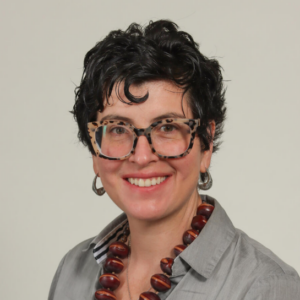
Dr. Lea Grinberg

Drawing on her extensive work in neuropathology, tau biology, and population-based brain banking, Dr Grinberg will share insights into emerging scientific directions in FTD, the importance of collaboration, and practical perspectives on career development for early investigators working in this rapidly evolving field.

Dr. Lea Grinberg

Dr. Gringberd is a neuropathologist (MD/PhD) with specialized training in clinical aspects of dementia and neuroanatomy. Her research focuses on neurodegenerative diseases, emphasizing their early, pre-symptomatic stages. After completing a residency in Pathology, she pursued a PhD in Neuropathology of Aging and Dementia, a research-oriented fellowship in Aging Neurology, and a post-doc in Neuroanatomy. She has a strong record of funding and publication, investigating neuropathological aspects of Alzheimer’s disease, tauopathies, and other age-related dementias, with a particular emphasis on early disease mechanisms, selective vulnerability, and deep phenotyping using histological and morphological methods. She founded and co-directed a prolific population-based brain bank specializing in age-related brain conditions in São Paulo, Brazil. I co-lead the UCSF/MAC Neuropathology Core and Neurodegenerative Disease Brain Bank within the UCSF Alzheimer’s Disease (AD) Research Center and lead the Neuropathological Core for the NIA-funded U01 LEADS project. Additionally, she directs a human validation core of an NINDS/U54 Center Without Walls for Tau Biology. Beyond her research, she conducts brain autopsies, provides diagnostic reports for neurodegenerative diseases, consults for extramural institutions, and actively participates in workgroups establishing diagnostic criteria for these conditions. She has a particular interest in tau deposition effects in the neuromodulatory subcortical system and have authored several papers on this topic. She is also the founder and first chair of the Neuromodulatory Subcortical Systems Professional Interest Area. In May 2025, she relocated with her whole lab to the Mayo clinics in Florida. She will also direct an initiative to modernize the Mayo’s Department of Neuroscience’s Brain Bank.

Social Determinants and Biological Embedding in Frontotemporal Lobar Degeneration

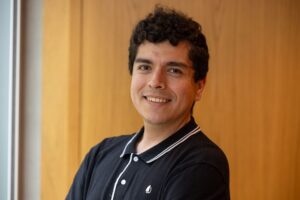
Dr. Joaquin Migeot

Social determinants of health are well established contributors to dementia risk, particularly in Alzheimer’s Disease, yet their role in FTLD remains poorly understood and with mixed results. Compared with other dementias, FTLD differs in its earlier age of onset, stronger genetic contribution, and preferential involvement of socioemotional brain networks. This suggests that social adversity may influence FTLD through mechanisms distinct from those typically proposed for Alzheimer’s disease. Chronic social stress may contribute to FTLD vulnerability through allostatic overload, particularly affecting interoceptive–allostatic brain systems involved in homeostatic and emotional regulation. This presentation will highlight the need to integrate social determinants, biological embedding, and network vulnerability to better understand how social adversity may shape the risk and expression of FTLD.

Dr. Joaquin Migeot

Joaquín Migeot is a researcher at the Latin American Brain Health Institute (BrainLat), Universidad Adolfo Ibáñez, where he leads research at the intersection of social neuroscience, cognitive aging, and equity in brain health across Latin America. He is also an Global Brain Health Institute (GBHI) Atlantic Fellow for Equity in Brain Health. He has authored over 25 peer-reviewed publications in leading international journals, including Nature Medicine, Nature Communications, Nature Aging, Trends in Neurosciences, and Alzheimer’s & Dementia. His work integrates social determinants of health, exposome science, and neurobiological markers to understand how structural inequality and lived environments shape brain aging and dementia risk. Methodologically, he combines multimodal neuroimaging, biomarkers, and advanced statistical and machine-learning approaches to model mechanisms linking adversity, allostatic load, interoceptive dysfunction, and neurocognitive decline. He contributes to large-scale regional collaborations, including the ReDLat Consortium, where he leads the integration and analysis of social, clinical, cognitive, and neuroimaging datasets across multiple Latin American countries. His contributions span empirical, theoretical, and meta-analytic work aimed at advancing equitable brain health and reducing disparities in dementia outcomes.